Airway Reflux
UPDATE: EsoRepair™ is running low due to high demand. Order only through the official site. [ORDER HERE]
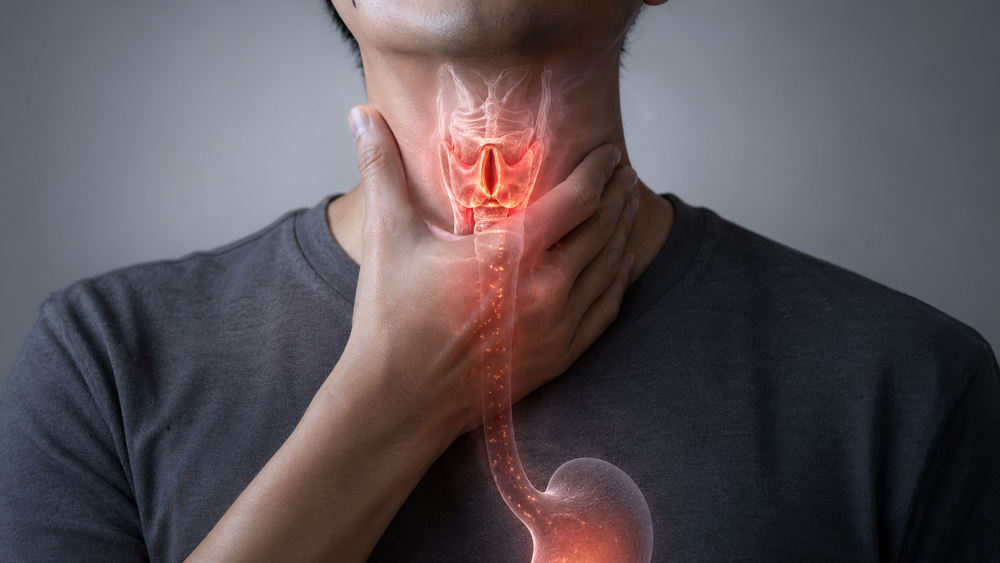
You've been clearing your throat for months. Maybe years. Your voice goes rough by mid-afternoon. There's a lump that never quite goes away, no matter how often you swallow. And a dry cough nobody can explain — not your GP, not the allergist, not the ENT.
You've tried allergy pills. Inhalers. Nasal sprays. Antibiotics. None of it touches it.
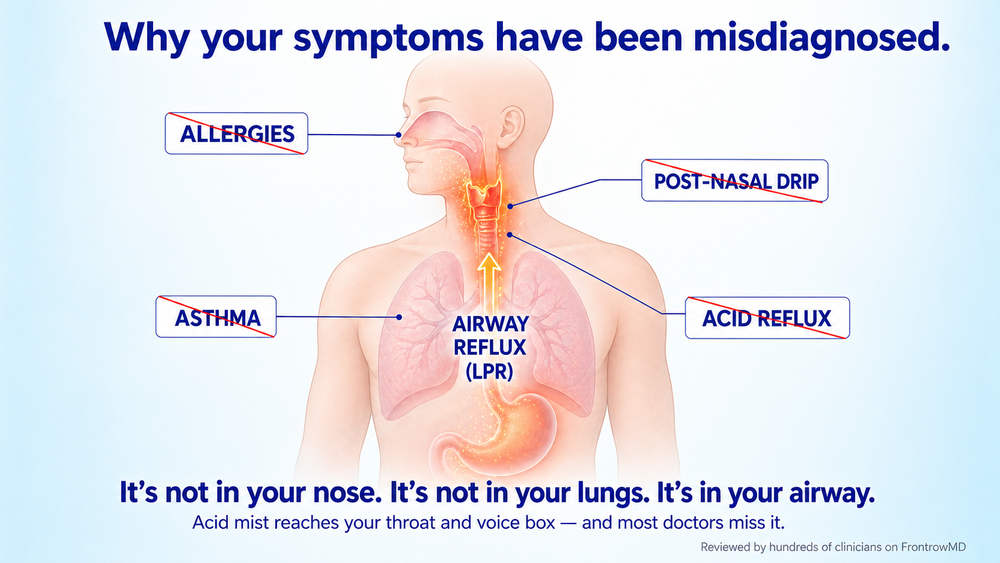
Here's what nobody told you: it isn't allergies. It isn't asthma. It's acid damage in your throat — and you may never feel a single second of heartburn.
The condition is called Laryngopharyngeal Reflux (LPR), also known as "silent reflux" or airway reflux. It affects up to 10% of adults, accounts for roughly half of all chronic hoarseness cases, and is one of the most consistently missed diagnoses in medicine [1].
If you've been passed from specialist to specialist without an answer, this article explains exactly what's happening inside your throat — and what actually works against it.
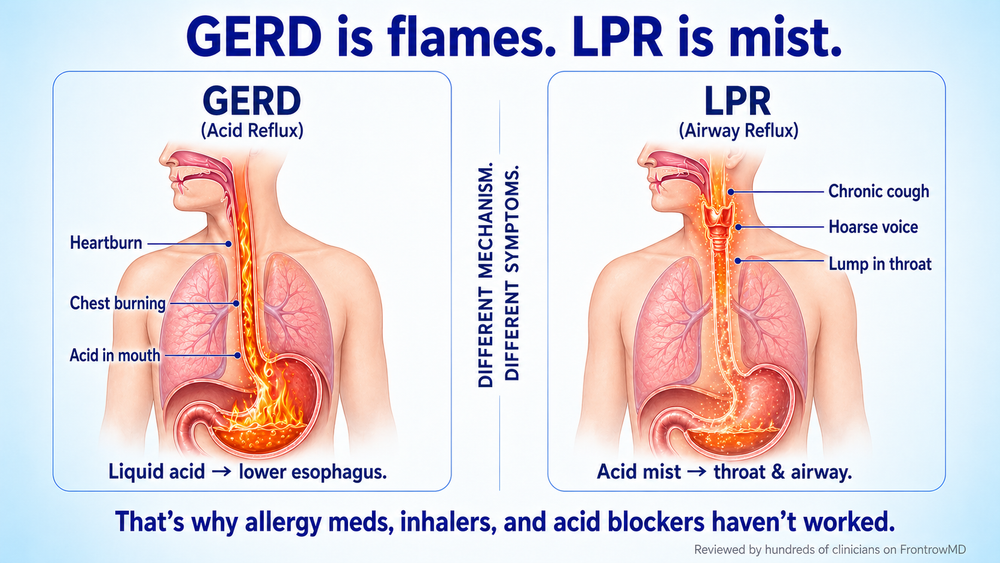
This is the single most important thing you'll read today: GERD and LPR damage different tissue, through different mechanisms, and they do not respond to the same approach [2].
GERD is what happens when stomach acid rises into the lower esophagus. Your esophagus is built for that fight — it has defenses that can absorb as many as 50 reflux episodes a day without lasting harm.
LPR is what happens when reflux travels further — past the upper esophageal sphincter, into the larynx, the pharynx, the airway itself. Your larynx has none of those defenses. Research suggests as few as 3 episodes are enough to injure laryngeal tissue [3].
Which explains why:
- Around 80% of GERD patients get heartburn — among LPR patients, only about 20% do [4]
- Roughly 87% of LPR patients clear their throat constantly — under 5% of GERD patients report the same
- Your GI specialist may tell you the esophagus "looks fine" — because the injury sits above the area being examined
- PPIs frequently underperform in LPR compared to GERD — because acid isn't the whole problem
That's the reason you've gone undiagnosed. Your condition doesn't appear where GERD is looked for.
 CHECK AVAILABILITY
Here is the piece of biology that reframes everything:
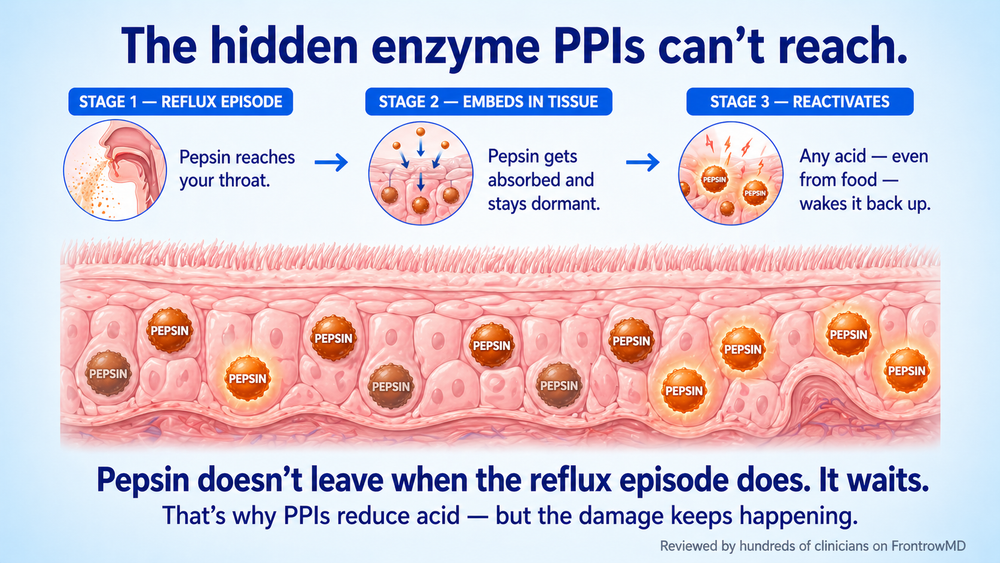
The primary agent of damage in LPR isn't acid on its own — it's a digestive enzyme called pepsin. Your stomach makes it to break down protein. When it refluxes into your throat, it is taken up into laryngeal tissue and remains there [5].
Long after the reflux episode ends. Even with no acid present. Pepsin sits inside the cells at neutral pH — inactive, but intact. The next time any acid reaches your throat — from a meal, a drink, or another mild episode — that dormant pepsin switches back on and resumes breaking down tissue from within [6].
This is why PPIs alone so often disappoint LPR patients:
- PPIs suppress acid production — but pepsin damages tissue even during non-acid reflux
- PPIs do nothing about pepsin already embedded in laryngeal tissue
- PPIs act on the stomach — they never coat or shield the throat and upper esophagus
- LPR calls for 6 months or more of treatment, against roughly 8 weeks for standard GERD [7]
One analysis put the human cost plainly: LPR patients consult an average of 10 specialists and go through 6 separate tests in year one alone — frequently with nothing to show for it [8].
The Reflux Symptom Index (RSI) is a validated clinical instrument for spotting LPR. A score above 13 makes LPR likely [9]. Rate each item from 0 to 5 (no problem through severe):
- Hoarseness or voice trouble — voice tires by afternoon, cracks mid-sentence, sounds raspy
- Throat clearing — a constant urge, worse after eating, mucus that never quite shifts
- Excess mucus or post-nasal drip — thick, sticky, unaffected by allergy medication
- Trouble swallowing — pills that scrape, food that lodges, a tight feeling
- Coughing after meals or when lying down — dry, persistent, unmoved by inhalers
- Breathing difficulty or choking sensation — catching your breath, a sense of the airway narrowing
- A nagging cough — the one no one has been able to name
- Lump in the throat (globus) — always present, swallowing never clears it
- Heartburn, chest pain, indigestion — present in only 20–35% of LPR patients
If three or more of these apply and heartburn is not your main complaint, what you are dealing with is most likely airway reflux — not classical GERD. And that changes everything about how it should be approached.
Your esophagus comes with defenses built in: carbonic anhydrase enzymes that neutralise acid, a thick stratified squamous lining, and peristalsis that clears refluxate quickly.
Your larynx has none of them.
It is lined with delicate ciliated respiratory epithelium — the same tissue type found in your lungs. When pepsin reaches it, the protective proteins that hold the barrier together (carbonic anhydrase III, E-cadherin) are depleted [10]. What follows:
- The epithelial barrier weakens → still more pepsin is absorbed
- Inflammatory pathways switch on → swelling, redness, mucus production
- Vocal cord tissue thickens → hoarseness and voice fatigue
- Cough receptors become sensitised → chronic cough that ignores standard treatment
- Globus sensation intensifies → the "lump" that refuses to leave
This is why your ENT can see inflammation but find no infection. This is why allergy medication does nothing. The damage is chemical — not viral, not allergic.

Here is the flaw in every capsule and tablet aimed at LPR: they bypass the tissue that needs the help. A pill drops straight through to the stomach. The throat, the larynx, the upper esophagus — precisely where LPR does its damage — never make contact with the active ingredients at all.
EsoRepair™ was built the other way round. It is a liquid formula you sip slowly. On the way down, nano-sized particles of soothing botanicals coat the full esophageal and upper airway tract — including the regions where silent reflux does its work [11].
For LPR specifically, that matters because:
- Marshmallow root and slippery elm form a mucilage layer that physically coats irritated laryngeal tissue on contact
- Sodium alginate forms a "raft" above the stomach contents — and research indicates alginates also inhibit pepsin and bile salts, which addresses the non-acid half of LPR [12]
- Hyaluronic acid lays a protective film over raw, pepsin-depleted tissue
- Zinc-L-Carnosine adheres to damaged tissue and supports its integrity under oxidative stress
The delivery format is the differentiator. For a condition that injures the throat, you need something that actually reaches the throat.
Alginates Inhibit Pepsin
Research shows alginates block pepsin AND bile salts — not just acid [12]
9 of 10 Soothed in 10 Min
Marshmallow root mucilage delivered rapid comfort in user surveys [13]
60% Less Tissue Damage
Zinc-L-Carnosine reduced severe esophageal issues during oxidative stress [14]
53% Better Comfort
HA + chondroitin sulfate improved outcomes when added to standard care [15]
*Results based on published studies of individual ingredients. Doses and forms may differ. Individual results vary. Not intended to diagnose, treat, cure, or prevent any disease.
LPR resolves more slowly than GERD — the literature recommends a minimum of 3 to 6 months of treatment [7]. EsoRepair™ is structured as a 90-day protocol:

Marshmallow root, slippery elm and alginate begin coating upper esophageal and laryngeal tissue. Users report less throat clearing, easier swallowing, and the "lump" beginning to loosen its grip.

Hyaluronic acid, chondroitin sulfate and glutamine support tissue maintenance across pepsin-depleted areas. Voice fatigue eases. Coughing grows less frequent. Many users start to trust their voice again.

Aloe vera, DGL licorice and quercetin support mucosal resilience and a healthy inflammatory response. Throat symptoms settle. That permanent post-nasal drip sensation fades out.

Your throat is operating from a new baseline. The voice holds all day. The cough has gone quiet. The globus is gone. For many people this is the point where it lands: the "allergy" they carried for years was never an allergy at all.
Covered by a 90-day money-back guarantee. No meaningful difference, full refund.
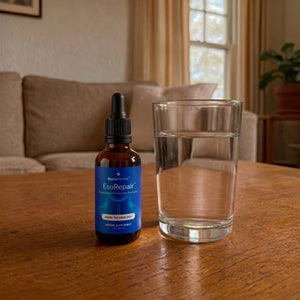

"Nothing reached the lump in my throat. Food felt stuck, my voice was rough, and lying flat was out of the question. This is the first thing that actually settled my esophagus. Within a few weeks swallowing felt normal again and my voice came back."
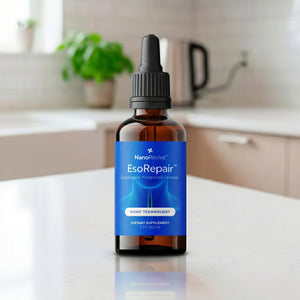
"I cook for a living, so reflux was quietly ending my career — I couldn't taste a dish through the pain. This turned it around completely. Two months in and I'm back to loving the work again."
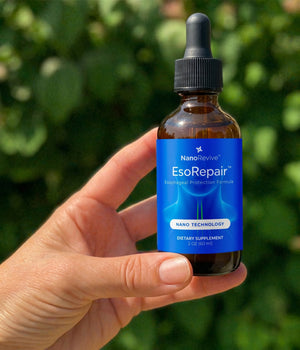
"This wrecked my head as much as my throat. At 51 I was bracing for every meal and living in fear of the next flare. Two months on, I can eat without rehearsing a disaster first. Calmer, clearer, like myself again."
"I don't get heartburn. Will this still help?"
EsoRepair™ was designed specifically to coat the upper esophageal and throat tissue — exactly where LPR causes its damage. Most LPR patients never get heartburn, and that is precisely why a liquid format that touches throat tissue directly matters more here than any capsule could.
"My ENT has me on a PPI. Can I take both?"
Yes. EsoRepair™ is built to sit alongside a PPI, not replace it. The PPI reduces acid production; EsoRepair™ coats and supports tissue that has already been damaged. Different halves of the same problem.
"How long until I notice something?"
Tissue recovery in LPR is slower than in GERD — clinical guidance points to 3 to 6 months. Most users describe symptom improvement beginning in weeks 2 to 4, with voice and cough following through weeks 4 to 6.
"It's expensive."
$1.63 a day on subscription. The average LPR patient spends around $5,438 in their first year on specialists and testing — often without improving. The 90-day money-back guarantee removes the risk entirely.
"I don't want a subscription."
Cancel whenever you like. No commitment. Start with a single bottle.
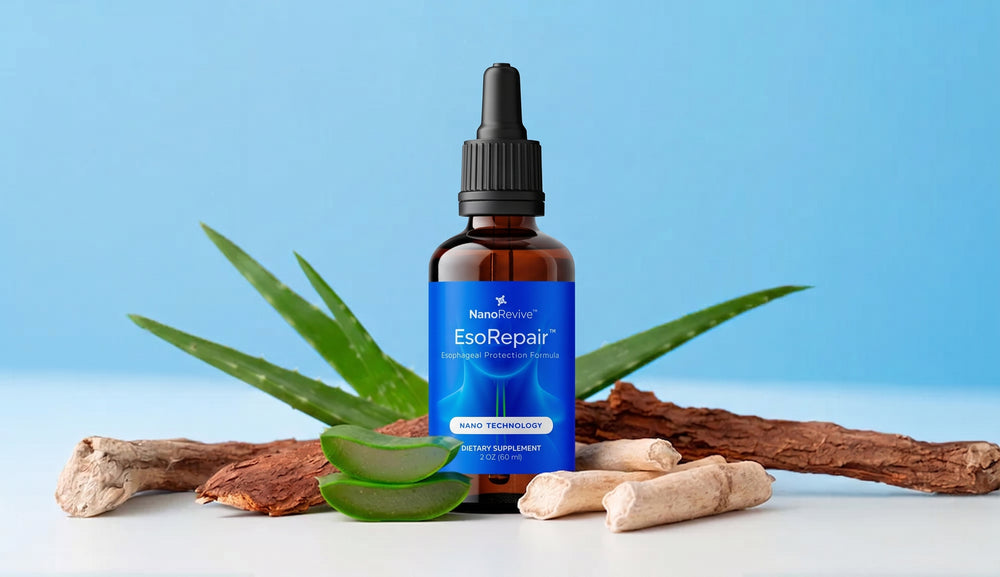
- Doctor-formulated with 11 research-backed ingredients
- Liquid nano delivery — coats throat and upper esophagus directly
- Alginate + marshmallow root inhibit pepsin on contact
- 90-day money-back guarantee
- Save up to 58% on subscription (cancel anytime)
You were told it was allergies. You were told it was post-nasal drip. You have worked through every spray and inhaler on the shelf. And your throat is still raw, your voice still fades, and the lump is still there.
It's time to deal with what is actually happening: acid and pepsin damaging tissue that was never built to withstand either. Try EsoRepair™ risk-free at 30% OFF.
[1] Lechien JR, et al. Laryngopharyngeal reflux: a state-of-the-art algorithm management. StatPearls / Otolaryngol Head Neck Surg. 2023.
[2] PMC11056915. Laryngopharyngeal reflux disease: updated examination of mechanisms, pathophysiology, treatment, and association with GERD. World J Gastroenterol. 2024.
[3] Koufman JA. The otolaryngologic manifestations of GERD. Laryngoscope. 1991.
[4] StatPearls — LPR: heartburn in 20% of LPR vs 80% of GERD; throat clearing 87% in LPR vs <5% in GERD.
[5] Johnston N, et al. Pepsin is detected in laryngeal biopsies of LPR patients. Ann Otol Rhinol Laryngol. 2007.
[6] PMC4297018. Pepsin remains stable at pH 7.4 and reactivates upon acid exposure; intracellular pepsin causes cumulative tissue damage.
[7] Sung CK. Stanford LPR Protocol — minimum 6-month treatment, twice-daily PPI dosing.
[8] PMC9012673. LPR patients see an average of 10 specialists and undergo 6 tests in the first year; $5,438 per patient annually.
[9] Belafsky PC, et al. The Reflux Symptom Index (RSI). J Voice. 2002.
[10] Johnston N, et al. Pepsin depletes carbonic anhydrase III, E-cadherin and Sep70 in laryngeal epithelium. Ann Otol Rhinol Laryngol. 2007.
[11] EsoRepair™ product formulation — liquid nano-delivery format designed for esophageal and upper airway tissue contact.
[12] PMC9012673. Alginates inhibit pepsin and bile salts; improve LPR symptoms as an adjunct to PPI therapy.
[13] Fink C, et al. Marshmallow root extract for irritative cough. Complement Med Res. 2018.
[14] Hayashi K, et al. Polaprezinc protects against esophagitis. Int J Clin Oncol. 2016.
[15] Savarino V, et al. HA–chondroitin sulfate in NERD. Aliment Pharmacol Ther. 2017.
Disclosure
The information presented on this website is not intended as specific medical advice and is not a substitute for professional treatment or diagnosis. These statements have not been evaluated by the Food and Drug Administration. This product is not intended to diagnose, treat, cure, or prevent any disease.
All trademarks on this site, whether registered or not, are the property of their owners. The authors of this site are not sponsored by or affiliated with any third-party trademarks or owners and make no representation about them, their owners, products, or services.
Disclosure Regarding Endorsements and Testimonials – Some of the people quoted throughout the website, whether consumers, experts, or otherwise, may have benefited in some way in return for their testimonial or endorsement of the product. Many endorsements are unsolicited emails, calls, or messages from satisfied customers, but other endorsers may have received free products.
This site is not a part of the Facebook website or Meta INC. Additionally, this site is not endorsed by Facebook in any way. Facebook is a trademark of Meta INC.